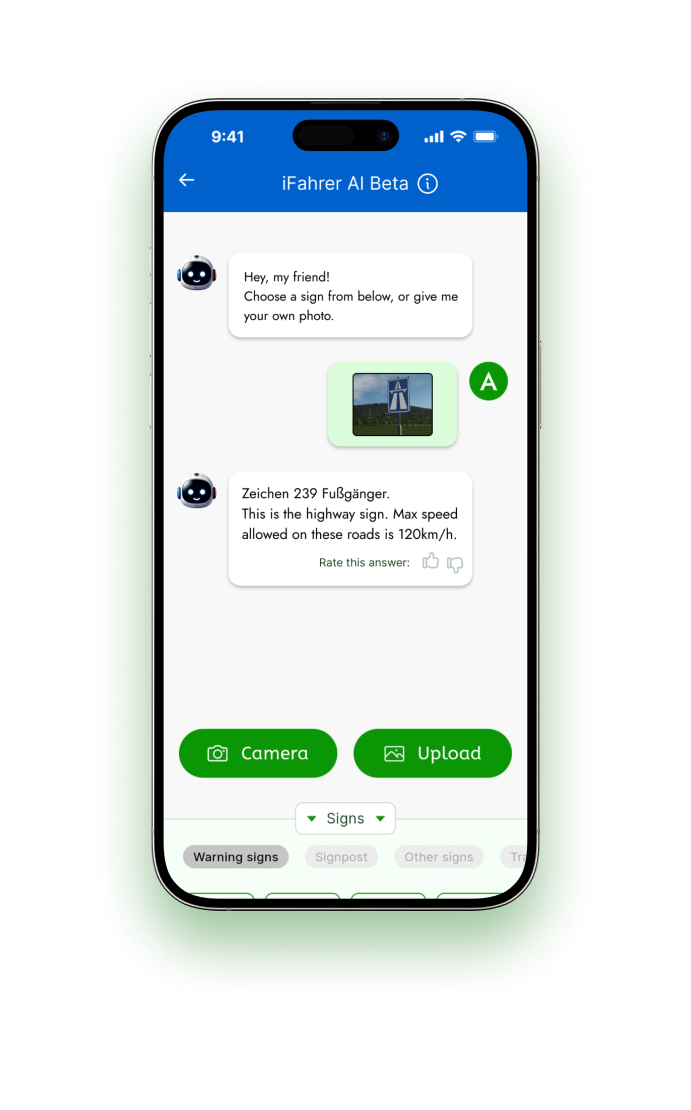
Get ready for your license test with AI assistance!
Where is stopping prohibited?
On the roadway, if there is a sufficiently wide hard shoulder on the right
Between lane dividers when direction arrows are marked on the roadway
At taxi ranks
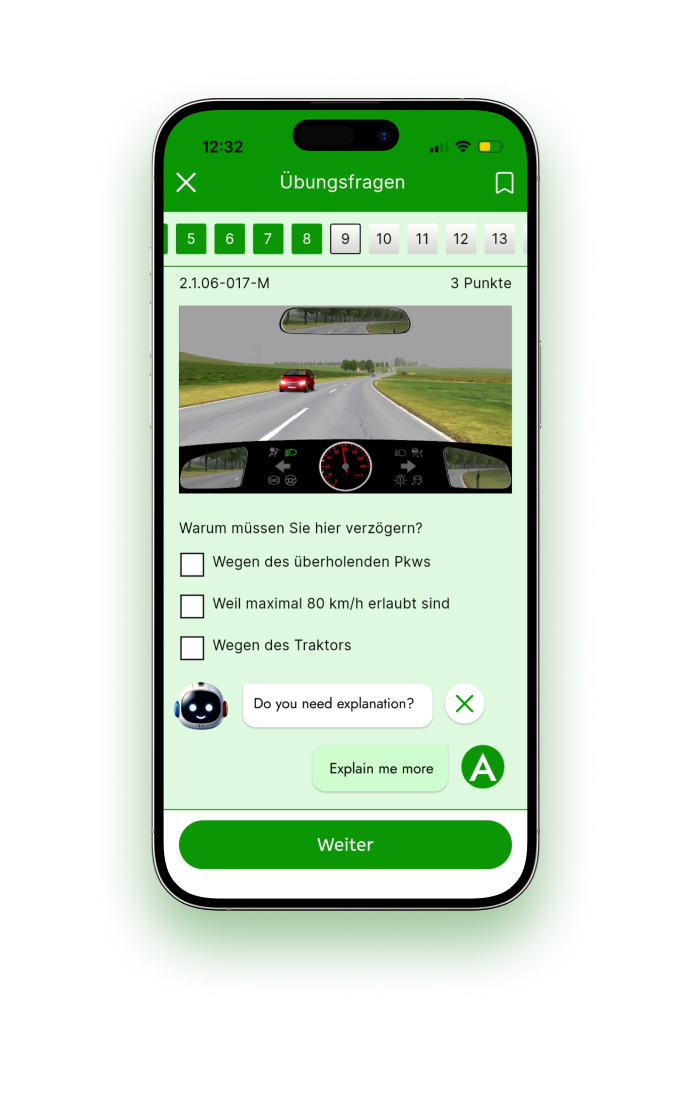
Here is Our AI Assistant's Explanation
Stopping is prohibited in all three places because in each case you would either unnecessarily block traffic flow or interfere with areas reserved for specific road users.
Answer 1 is correct: If there is a sufficiently wide hard shoulder on the right, you must use it instead of stopping on the roadway. The rule of thumb is: never stop on the driving lane if you can reasonably get out of the flow of traffic. Stopping on the roadway creates an avoidable obstacle and increases the risk of rear-end collisions.
Answer 2 is correct: You must not stop between lane divider lines when direction arrows are marked. Those arrows and lane markings assign lanes for turning/going straight, and stopping there blocks an entire lane and disrupts the intended lane guidance, especially at junction approaches where traffic needs to sort into the correct lanes.
Answer 3 is correct: Taxi ranks are reserved for taxis. Stopping there (even briefly) can prevent taxis from using their designated waiting area and can disrupt passenger pickup. As a rule: areas marked or designated for specific vehicles (like taxi stands, bus stops, disabled bays, etc.) are not for general stopping unless you are entitled to use them.
A useful habit for similar questions: ask yourself “Would stopping here block a lane or steal a reserved space?” If yes, it’s typically prohibited.